
Private repositories often contain more than source code. They can include business logic, customer-specific integrations, internal APIs, unreleased product ideas, credentials by mistake, and assumptions that are not meant for public exposure.
An AI IDE for private repositories should not make developers guess what is happening. It should keep the workspace understandable: which files are open, what the agent changed, which provider is used, what commands ran, and what Git says about the final state.
Private repository does not mean unlimited AI context
GitHub describes private repositories as accessible only to the owner, explicitly shared users, and eligible organization members. That repository visibility is important, but it is not the whole AI privacy story.
If a developer copies private code into a prompt, sends selected files to a cloud model, or lets a tool collect terminal output, that context can leave the repository boundary. Whether it is used for training, retained, or processed depends on the provider, account type, configuration, and tool behavior.
A secure AI coding workflow for private repositories
The safest AI workflow is not "never use AI." It is "make the AI boundary explicit." Developers need to know what context is being used, where credentials live, what changed, and what is safe to commit.
Open the project locally
Keep the repository as a local workspace with visible files, terminal, Git, and review state.
Use explicit provider access
Prefer BYOK or managed team keys so model access, billing, and policies are clear.
Minimize shared context
Send only what the task needs. Avoid secrets, tokens, customer data, and unrelated proprietary files.
Review before commit
Inspect changed files, inline diffs, terminal output, tests, dependency changes, and Git status.
Private repository AI checklist
Before accepting AI-generated code in a private repository, check the work as both a developer and a security reviewer. The goal is not paranoia. The goal is to keep ownership of the repository clear.
| Question | What to verify |
|---|---|
| What was sent to the model? | Confirm whether the tool used selected files, snippets, terminal output, logs, dependency files, or broader project context. |
| Which account is used? | Check whether AI requests go through your own provider key, a team account, or a bundled vendor account. |
| Are secrets protected? | Keep API keys, tokens, private keys, passwords, and production credentials out of prompts, files, logs, and commits. |
| What changed? | Review inline diffs, generated files, lockfiles, config changes, and deleted files before accepting work. |
| Did tests and tools run? | Inspect terminal output, test results, build output, lint results, and live preview behavior. |
| Is Git clean? | Use Git status and diff to stage only reviewed changes that belong in the commit. |
Where CodeWinger fits
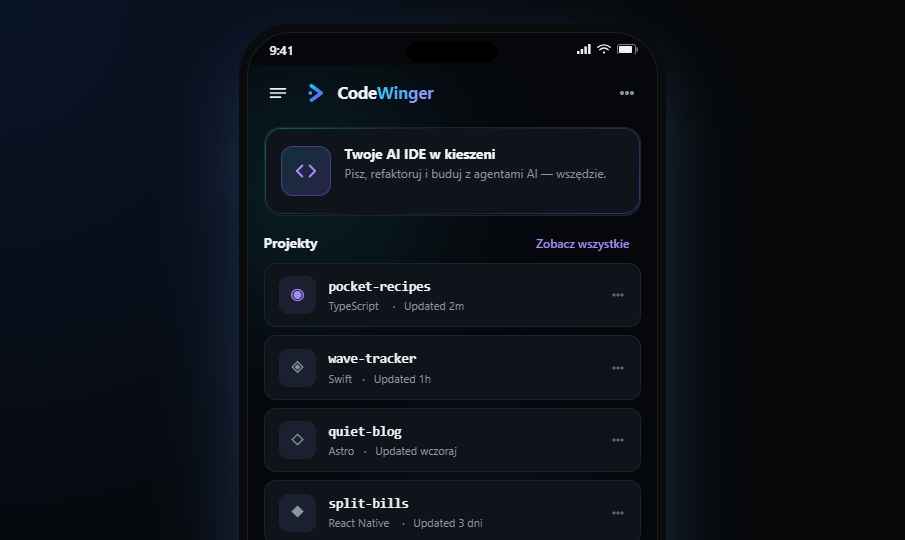
CodeWinger is designed as a local-first AI IDE for developers working with local project folders. It brings agent editing, inline diff review, terminal, Git, LSP, live preview, and BYOK provider keys into one desktop workflow.
That does not remove the need for provider policy review or team security rules. It does make the workflow easier to reason about: the project starts locally, the agent proposes changes, the developer reviews the diff, and Git remains the final boundary before commit.
Try it
Download CodeWinger Desktop for Windows x64
CodeWinger Desktop 0.3.0 is currently free. The setup installer is the recommended download for normal Windows users.
FAQ
Can developers use AI with private repositories?
Yes, but they need a controlled workflow. Developers should understand what context is sent to model providers, keep secrets out of prompts and commits, review diffs, run tests, and inspect Git state before accepting AI-generated changes.
Does a private repository stay private when using an AI IDE?
A private repository can remain private as a Git repository while selected prompts, snippets, logs, or files may still be sent to the chosen model provider. Developers should check provider data controls and tool behavior.
Why is local-first design useful for private repositories?
Local-first design keeps the project workspace centered on the developer's machine. That makes file access, diff review, terminal output, Git state, and credential handling easier to reason about.
What is the role of BYOK for private repositories?
BYOK means bring your own key. It lets developers or teams use their own provider accounts, policies, billing, and model access instead of relying only on a bundled tool account.
What should never be sent to an AI coding tool?
Developers should avoid sending secrets, production credentials, private keys, access tokens, customer data, regulated data, and unnecessary proprietary context unless policy and provider controls explicitly allow it.
Does CodeWinger support private repository workflows?
CodeWinger is designed for local-first work with local project folders, agent editing, inline diff review, terminal, Git, LSP, live preview, and BYOK provider keys. Developers still need to follow their team's data and security policies.