
AI coding agents are useful because they can move beyond one suggestion at a time. They can edit multiple files, respond to build errors, add tests, and iterate. That same power increases the need for a clean review layer.
The right question is not whether you trust AI. The right question is whether your workflow makes every AI-generated change visible enough to evaluate. Inline diff review gives developers a place to slow down without losing the speed advantage of agentic coding.
Why diff review is the safety layer for AI coding
A diff is more honest than a summary. It shows which files changed, which lines were added or removed, and whether the implementation matches the request. That matters even more when the agent touches a codebase instead of producing a snippet in chat.
Traditional developer tools already treat diffs as a serious boundary. Git exposes changes through commands such as git diff. IDEs show side-by-side comparisons. Pull requests create a review surface before code is merged. AI coding should not remove that habit. It should bring it closer to the moment where the change is created.
The AI coding review loop
A strong agent workflow has several small gates. Each gate catches a different class of mistake. The agent can still do useful work quickly, but the developer does not have to accept a mysterious bundle of changes.
Read the intent
Understand what the agent tried to do and whether the plan matches the task.
Inspect changed files
Look for files that should not have been touched, generated noise, or hidden scope creep.
Review the inline diff
Check logic, naming, error paths, security-sensitive changes, and accidental deletions.
Run the feedback loop
Use tests, build output, preview, terminal logs, and Git status before accepting the work.
What to check before accepting AI-generated code
Inline diff review is not only about spotting syntax mistakes. The highest-risk AI changes are often plausible changes in the wrong place: a shortcut in auth logic, a broad dependency upgrade, a deleted edge case, or a test that asserts the implementation instead of the behavior.
| Review area | What to inspect |
|---|---|
| Scope | Did the agent touch only the files needed for the task? |
| Logic | Does the new path handle errors, empty states, permissions, and existing contracts? |
| Security | Did the change expose secrets, loosen validation, weaken auth, or log sensitive data? |
| Dependencies | Were packages, lockfiles, build scripts, or environment assumptions changed? |
| Tests | Do tests cover behavior, or did the agent only make tests match the generated code? |
| Git state | Are staged and unstaged changes exactly what you intend to commit? |
Inline diff review before Git review
Git and pull requests are still important. Inline diff review does not replace them. It moves the first review closer to the agent edit, where the developer still has fresh context and can ask for a correction before the change becomes a commit.
That is the key distinction: a pull request review is often a team boundary. Inline diff review is a developer boundary. It helps you decide whether the agent's work deserves to become part of your local history at all.
For agentic coding, that local boundary is essential. It keeps speed from turning into unreviewed accumulation.
Where CodeWinger fits
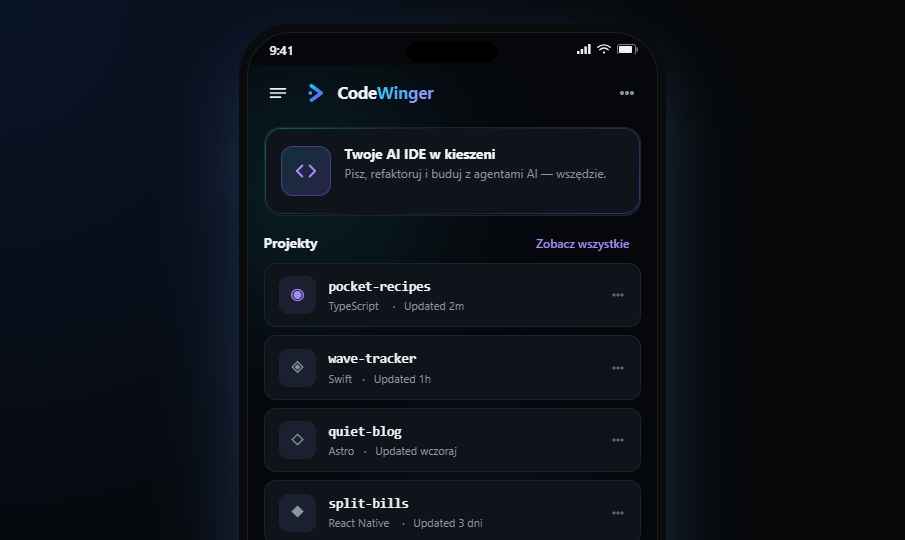
CodeWinger is designed around agent editing with inline diff review. The agent can propose changes, but the developer stays close to the actual files, the diff, the terminal, the preview, and Git state.
That is the product philosophy: let the AI accelerate implementation, but keep the human responsible for accepting code. The IDE should make review feel native instead of treating it as an afterthought.
Try it
Download CodeWinger Desktop for Windows x64
CodeWinger Desktop 0.3.0 is currently free. The setup installer is the recommended download for normal Windows users.
FAQ
What is inline diff review in AI coding?
Inline diff review means inspecting the exact code changes proposed by an AI agent directly in the editor before accepting them into the project.
Why is diff review important for AI-generated code?
Diff review keeps the developer in control. It helps catch unintended file changes, logic errors, dependency edits, formatting noise, and security-sensitive modifications before the work is accepted.
Is reviewing the AI chat answer enough?
No. The chat answer can explain the intent, but the diff shows what actually changed in the repository. Developers should review the diff, run tests, and inspect Git state.
What should developers check before accepting an AI agent change?
Developers should check changed files, inline diffs, test output, terminal output, dependency changes, generated files, formatting churn, and Git status before accepting or committing AI-generated work.
How does inline diff review fit with Git?
Inline diff review happens before the commit. Git then gives a second boundary through status, staged changes, commit history, and pull request review.
Does CodeWinger support inline diff review?
Yes. CodeWinger is designed around agent editing with inline diff review so developers can inspect AI-proposed changes before accepting them.