
The difference is not just price. Subscription models bundle access, support, and infrastructure into one fee. That can be convenient, but it also hides the true cost of each interaction. When usage grows, subscriptions either throttle access or add overage charges. With BYOK, every dollar of spend maps to a specific provider, model, and task. That transparency is what makes cost optimization possible.
For teams scaling AI coding across 10, 50, or 200 developers, the pricing model matters enormously. A $50/seat/month subscription costs $60,000/year for a 100-person team. BYOK with disciplined model routing can deliver the same or better productivity at a fraction of that cost, because not every task needs the most expensive model.
Why cost volatility is the #1 concern
Agentic AI coding workflows consume far more tokens than simple autocomplete. A single agent session that reads files, proposes edits, runs tests, interprets errors, and iterates can burn through 50,000-200,000 tokens. Multiply that by a full team working on real codebases, and API bills can swing 2-3x from one quarter to the next.
Engineering leaders consistently cite cost unpredictability as their top concern when evaluating AI coding tools. It is not the absolute cost that worries them. It is the inability to forecast it. A tool that costs $2,000 one month and $6,000 the next creates budget risk that finance teams struggle to approve.
The root cause is a mismatch between how AI tools consume resources and how organizations budget for them. Traditional developer tools have fixed license costs. AI tools have variable usage costs that depend on prompt size, model choice, context window utilization, agent loop depth, and whether generated code is accepted or regenerated. Without visibility into these variables, cost control is guesswork.
Why BYOK gives you cost control
Transparent pricing
You see exactly what each model costs per token. No bundled fees, no hidden markups. Every API call maps to a visible line item on your provider dashboard.
No subscription markup
You pay provider rates directly. The IDE does not add a per-seat fee on top of your API usage. For light and moderate users, this is significantly cheaper.
Model switching
Use a $0.50/M-token model for boilerplate and a $15/M-token model for architecture decisions. Match the model to the task instead of paying premium rates for everything.
Budget control
Set spending limits directly with your API provider. Get alerts before you hit thresholds. Pause usage if needed. No surprise invoices at the end of the month.
Direct provider relationship
Your usage data, rate limits, and billing are between you and the provider. You can negotiate volume pricing, access new models on day one, and switch providers without changing your IDE.
Techniques for reducing AI coding spend
- Route by task complexity. Use smaller, faster models (GPT-4.1 mini, Claude Haiku, Gemini Flash) for autocomplete, formatting, and simple refactors. Reserve frontier models for multi-file reasoning, architecture decisions, and complex debugging.
- Scope your context window. Do not send the entire codebase when the model only needs two files. Context engineering, selecting exactly which files, functions, and documentation to include, reduces input tokens and improves output quality.
- Review before regenerating. When AI output is 80% correct, edit the result manually instead of re-prompting. Each regeneration costs tokens. Inline diff review makes partial acceptance fast.
- Set iteration limits on agents. An agent that retries a failing approach 10 times burns tokens without progress. Cap iterations at 3-5 and intervene with better guidance when the agent is stuck.
- Batch related tasks. Instead of five separate prompts for five related changes, describe them in one well-scoped prompt. This reduces overhead from repeated context loading.
- Track and benchmark. Monitor your weekly API spend. Identify which tasks consume the most tokens. Set team guidelines for model selection and prompt discipline. What gets measured gets managed.
ROI calculation: when does AI coding pay for itself?
Research from multiple developer surveys suggests that AI coding tools save roughly 3.6 hours per week for an active developer. At an effective hourly cost of $50-100 (including salary, benefits, and overhead), that is $180-360 in recovered productivity per week, or $720-1,440 per month per developer.
Compare that to actual API costs. A developer using BYOK with disciplined model routing typically spends $15-60/month on API calls. Even at the high end, the productivity gain outweighs the cost by 10-20x. The ROI is not theoretical. It shows up in faster feature delivery, fewer context-switching interruptions, and reduced time on boilerplate tasks.
The break-even point is almost immediate for any developer who uses AI coding tools daily. The real question is not whether AI coding pays for itself, but how much value you leave on the table by overpaying for a subscription when BYOK gives you the same model access at provider rates.
How CodeWinger keeps costs transparent
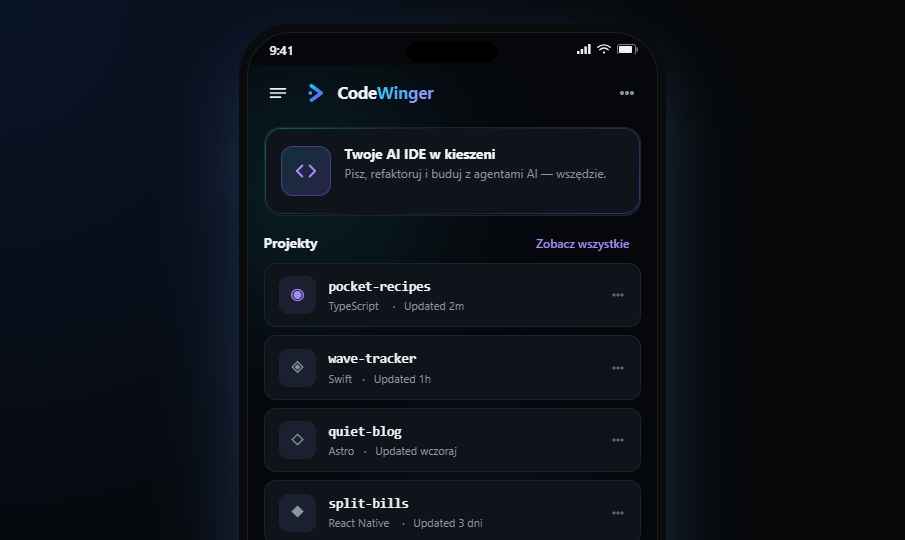
CodeWinger is built on a BYOK-first architecture. There is no subscription, no markup, and no bundled AI account. You connect your own provider keys and pay only what the provider charges. That means every dollar of AI spend is visible, trackable, and optimizable.
- BYOK with no markup — pay provider rates directly, no per-seat subscription fee.
- Multi-model support — switch between providers and models per task to match cost to complexity.
- Context engineering — select specific files and functions to include, reducing unnecessary token consumption.
- Inline diff review — accept, edit, or reject AI changes before they touch your codebase, avoiding wasteful regeneration.
- Local-first design — project files stay on your machine, reducing round-trip overhead and keeping your workflow grounded.
- Agent iteration control — review agent progress and intervene early to prevent runaway token usage.
Try it
Download CodeWinger Desktop for Windows x64
CodeWinger Desktop 0.3.0 is currently free. The setup installer is the recommended download for normal Windows users.
Bottom line
AI coding costs are not inherently unpredictable. They become unpredictable when the pricing model hides usage details behind a subscription or when developers lack the tools to route tasks efficiently. BYOK restores transparency. Multi-model routing restores control. And disciplined context engineering turns AI coding from a budget risk into a measurable productivity investment.
FAQ
How much does AI coding cost per month?
It depends on usage patterns. Subscription-based AI IDEs charge $20-100/month per seat. With BYOK, typical individual developers spend $10-60/month on API calls, though heavy agentic usage can push higher. The key advantage of BYOK is that you only pay for what you actually use.
Is BYOK cheaper than a subscription AI IDE?
For most developers, yes. Subscription tools bundle a markup into the monthly fee. With BYOK you pay provider rates directly. Light users save significantly, and heavy users get transparent billing instead of surprise overages or throttled access.
When does AI coding pay for itself?
Research suggests AI coding tools save roughly 3.6 hours per week for an active developer. At typical hourly rates, even $50-80/month in API costs pays for itself many times over. The ROI becomes clearer when you track both time saved and tokens consumed.
How do I budget for AI coding API costs?
Start by setting spending limits with your API provider. Track usage weekly for the first month. Use smaller models for simple tasks and reserve premium models for complex reasoning. Most providers offer usage dashboards and budget alerts.
Are free AI coding tools good enough?
Free tiers work for light usage and learning. For production work, they typically have rate limits, restricted model access, and limited context windows. BYOK tools like CodeWinger are free to download while giving you full control over which models and providers you use.
How does CodeWinger help control AI coding costs?
CodeWinger uses a BYOK model with no subscription markup. You pay only provider rates. Multi-model support lets you route simple tasks to cheaper models. Context engineering and diff review reduce wasted tokens by keeping prompts focused and avoiding unnecessary regeneration.